
9:45 AM
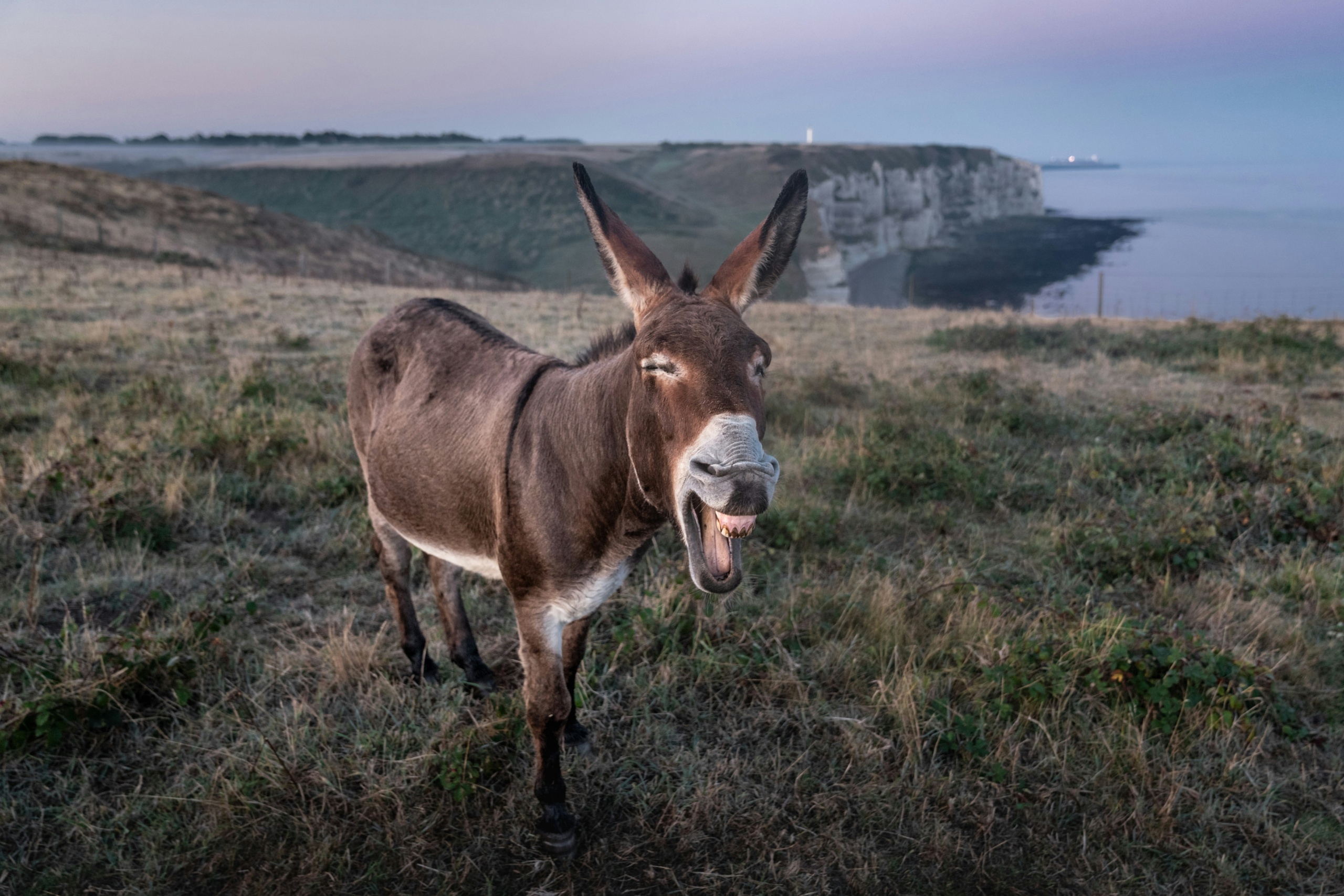
The most underestimated animal in the leadership canon is also the most useful one. When I titled my book Any Dumb-Ass Can Do It, I knew most people would smile and move on. In Australian English, a “dumb ass” is a donkey. And donkeys, properly understood, embody the leadership traits that actually compound over time: steadiness, loyalty, the willingness to carry a load, and the absence of ego that lets a team move forward when the road gets hard.
Most leadership content celebrates the lion. The bold predator. The alpha. The visionary who roars first and asks questions later. That archetype has dominated business writing for four decades and produced a generation of leaders chasing charisma instead of cultivating consistency. The donkey is the antidote. What follows is the case for why steady, unglamorous, load-bearing leadership outperforms the lion archetype across every measure that matters: employee engagement, retention, psychological safety, and long-term enterprise value.

TLDR
- The lion archetype rewards visibility, dominance, and charisma. Research on long-tenured CEOs and high-trust organizations rewards the opposite: consistency, humility, and care.
- Donkey traits map directly to what behavioral research calls psychological safety, servant leadership, and the Circle of Safety described in Simon Sinek’s Leaders Eat Last.
- Gallup’s 2026 State of the Global Workplace report shows global employee engagement has dropped to 20 percent, the lowest level since 2020, and the decline is driven almost entirely by managers disengaging.
- Long-serving CEOs in the top performance quartile deliver returns their charisma-driven successors cannot replicate, with 69 percent of those successors falling to the bottom two quartiles.
- The leadership lesson is plain: stop trying to roar. Start carrying the load.
Why Is the Lion Archetype Failing Modern Organizations?
The lion archetype is failing because it optimizes for the wrong outcome. It rewards the visible performance of leadership over the invisible work of building trust. The cost of that mismatch is now measurable. Global employee engagement dropped to 20 percent in 2025, down from a peak of 23 percent in 2022, costing the world economy approximately $10 trillion in lost productivity, or 9 percent of global GDP, according to Gallup’s 2026 State of the Global Workplace report. The most striking part of that data is what is driving the drop. Lower engagement among managers accounts for most of the recent downturn.
Lion-style leaders generate excitement and short-term momentum, then leave organizational debt behind them when the spotlight moves on. PwC’s Strategy& global CEO study found that 69 percent of successors replacing top-quartile long-serving CEOs ended up in the bottom two performance quartiles. The companies built on charisma do not survive the charismatic leader. The companies built on consistent behavior do.
“Leadership is not what you write on the wall. It is how your people experience their leader every single day.”
That framing reflects a body of behavioral research that has been quietly assembling for two decades. Amy Edmondson’s work at Harvard Business School shows that performance is gated not by individual brilliance but by whether people feel safe enough to speak up, admit mistakes, and offer dissenting views. Lion leaders, by design, discourage all three.
What Leadership Traits Does the Donkey Actually Represent?
The donkey represents five traits that compound over time: consistency, loyalty, load-bearing endurance, situational awareness, and the willingness to protect the herd. None of them photograph well. All of them retain talent.
Donkeys do not panic. They do not abandon the group when threatened. They carry weight others cannot. They stand their ground when they see a real danger, which is why farmers in many parts of the world use them as guard animals for sheep and cattle. The behavioral analog in organizational life is the leader who absorbs pressure rather than transmitting it downward, who shows up the same way on a hard Monday as on a celebratory Friday, and who notices what is actually happening in the room.
This is the foundation of what management researchers call servant leadership. A 2020 study published in SAGE Open found that servant leadership behaviors produce measurable gains in task performance and organizational citizenship through the mediating mechanism of affective trust. Trust, in turn, is built through repeated small behaviors, the unglamorous ones lions tend to skip.
How Does Donkey Leadership Connect to the Circle of Safety?
Donkey leadership operates the way Simon Sinek describes the Circle of Safety in Leaders Eat Last: by absorbing external threats so the team can focus on the work, rather than burning energy defending itself from internal politics. Sinek arrived at the idea through a Marine Corps tradition where the most senior officers eat only after the most junior have been fed.
Sinek’s central argument is that great leaders sacrifice their own comfort for the people in their care, and the teams that perform best are those whose leaders build a perimeter of trust that separates the security inside the group from the challenges outside.
I built WD-40 Company’s culture on the same principle, though I describe it in different language. I used the word tribe, drawing on Sebastian Junger’s definition in Tribe: On Homecoming and Belonging: a group of people who help feed and defend each other. During my tenure, employee engagement at WD-40 exceeded 93 percent, and 98 percent of employees reported being proud to say where they worked. Those numbers are not lion numbers. Those are the numbers a donkey produces by showing up the same way every day for 25 years.

Why Does Consistency Outperform Charisma Over the Long Run?
Consistency outperforms charisma because trust is the product of repetition, not intensity. A single inspiring speech does not change behavior. A thousand small congruent acts do. McKinsey’s research on mid-tenure CEOs found that the leaders who sustain performance over years are the ones who keep their core messages consistent while adapting strategy based on learning. The best of them, McKinsey notes, build environments where the leadership team feels safe to admit uncertainty.
“You don’t measure psychological safety by what people say to you. You measure it by what they’re willing to risk in front of you.”
That distinction is where the donkey beats the lion. People will not risk speaking the truth around a leader who roars. They will risk it around a leader they have watched behave the same way under pressure twenty times. I call the events that arise from this kind of culture Learning Moments. Edmondson’s research at Harvard shows the same thing through a different vocabulary: in psychologically safe environments, people surface problems faster, errors get caught earlier, and innovation accelerates.
The numbers prove it can be done. In best-practice organizations identified in Gallup’s 2026 report, 79 percent of managers are engaged at work, nearly quadruple the global average. That gap is not motivation. It is method. It is the difference between organizations led by lions and organizations led by donkeys.
How Can Leaders Stop Performing the Lion and Start Behaving Like the Donkey?
Leaders can shift from lion to donkey by replacing performance behaviors with load-bearing behaviors. That means asking better questions, going first with vulnerability, and protecting the people closest to the work rather than protecting one’s own image.
Here is a simple gut check I learned from my dear friend Ken Blanchard: would your people choose to work for you again? If the answer is anything less than a confident yes, the work begins inside the leader, not inside the team. The leadership philosophy I developed with Ken in our book Helping People Win at Work frames the leader as a coach standing on the sideline rather than a boss marking the paper. The coach helps players get an A. The boss decides whether they earned one.
Three practical behavior shifts move a lion toward the donkey:
- Replace “why” questions with “what” questions. Michael Bungay Stanier’s coaching framework uses seven questions that begin with “what” rather than “why.” Why demands defense. What invites contribution.
- Make your own mistakes public first. Harvard Business School research on psychological safety shows that leader vulnerability is the strongest predictor of whether team members will surface their own.
- Show up the same way on hard days as on easy ones. Behavior in ordinary moments is what people remember when extraordinary moments arrive.
Frequently Asked Questions
What does “donkey leadership” actually mean?
Donkey leadership is shorthand for the unglamorous traits that build trust over time: consistency, loyalty, situational awareness, the willingness to carry weight, and the absence of ego. The term draws on the original meaning of the word “ass” as the animal, not the insult. The traits map directly to what management researchers call servant leadership.
Why is the lion archetype still so dominant in business culture?
The lion archetype dominates because it photographs well and produces short-term excitement. Boards, media, and investors reward visibility over consistency. The cost is paid later, when charisma-built organizations underperform after the charismatic leader leaves. PwC’s Strategy& global CEO study documented this pattern across 19 years of data.
What evidence supports the case for servant leadership over charismatic leadership?
Peer-reviewed research published in SAGE Open in 2020 found servant leadership significantly improves task performance and organizational citizenship through affective trust. Gallup’s 2026 State of the Global Workplace report confirms that lower engagement among managers accounts for most of the recent global downturn, and best-practice organizations achieve 79 percent manager engagement, nearly quadruple the global average.
How long does it take to build a donkey-style culture?
Trust is built in months and lost in seconds. A leader can begin shifting behavior immediately by going first with vulnerability, replacing why questions with what questions, and showing up consistently under pressure. The cultural compound interest accumulates over years, which is why long-tenured CEOs tend to outperform their successors so dramatically.
Is donkey leadership the same as being soft on performance?
No. Servant leadership requires what I call a heart of gold and a backbone of steel. The donkey carries the load and protects the herd, which means setting clear standards and holding people to them. Clarity is a form of care. People cannot win at work if they do not know what winning looks like.
Where can leaders start if they recognize themselves as a lion?
Start by reading Amy Edmondson’s The Fearless Organization and Simon Sinek’s Leaders Eat Last alongside the work of Ken Blanchard and Michael Bungay Stanier. Then audit your own behavior in three ordinary moments this week: how you respond to bad news, how you handle a mistake on your team, and how you react when someone disagrees with you. The donkey shows up in the small moments, not the staged ones.
Stop Trying to Roar. Start Carrying the Load.
The leaders I admire most never tried to be the smartest person in the room. They tried to create a room where smart people felt safe enough to contribute. They carried weight, told the truth, and showed up the same way every day for years. The lion gets the magazine cover. The donkey builds the company that lasts.
If you want to lead in a way that compounds, stop performing leadership and start practicing it. Want to go deeper on building a culture of belonging, learning, and consistent leadership behavior? Visit The Learning Moment to explore the frameworks, tools, and coaching that help leaders make this shift in their own organizations.
READY TO GET STARTED?
Get in touch
I’d love to help you build a culture where people feel connected, do meaningful work, and bring out the best in each other. Whether you’re looking for a keynote that sparks change or one-on-one coaching, let’s talk about what’s best to build your tribe.